Sometime in the last year, you may have said to yourself, “I should start a podcast for my business.” Maybe you even said it out loud to a partner or a friend. Then a few months went by, but you never started.
Even though you’ve got a good company, you may find yourself hesitating to sit down and record yourself. Almost everyone who eventually records goes through the same stalling phase, and there are a few common reasons for it.
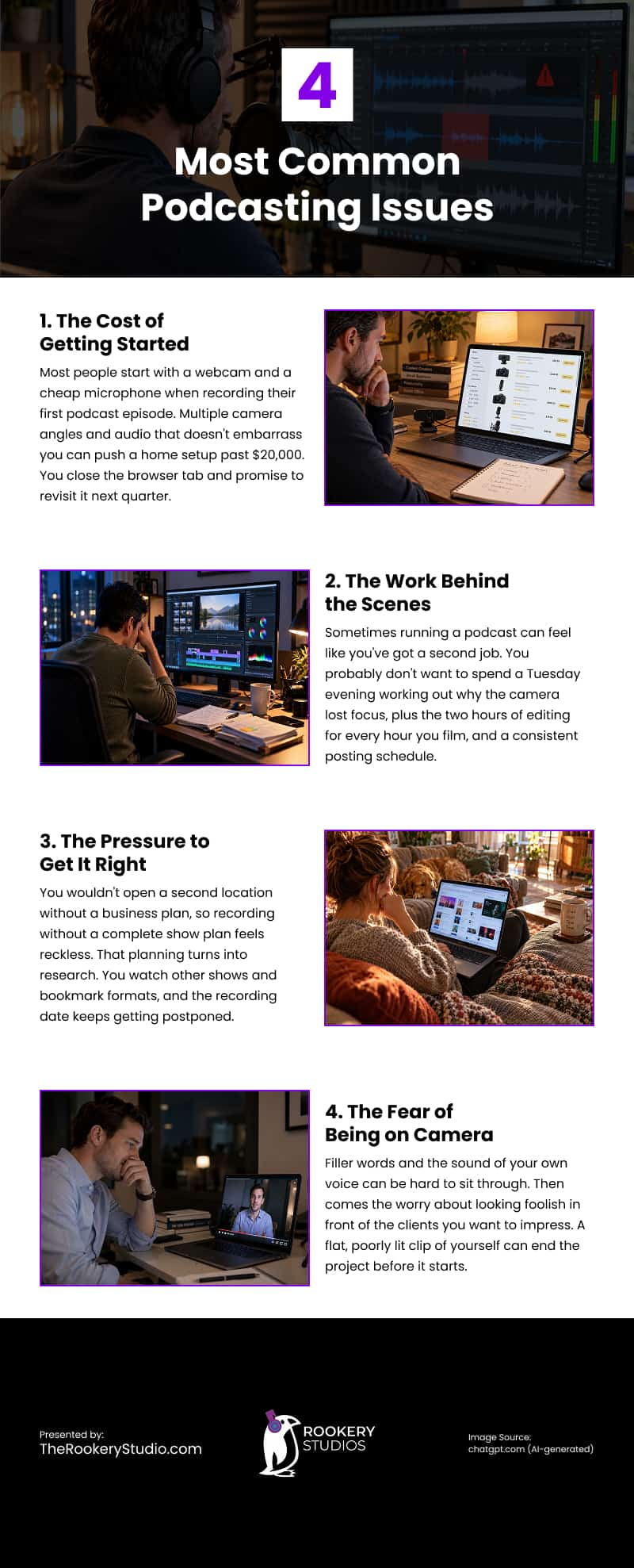
The Four Most Common Podcasting Issues
1. The Cost of Getting Started
Most people start with a webcam and a cheap microphone when recording their first podcast episode. With this setup, the first recording may sound thin and look grainy, so you start researching what a proper setup requires. Multiple camera angles and audio that doesn’t embarrass you can push a home setup past $20,000. You close the browser tab right there and promise to revisit it next quarter.
2. The Work Behind the Scenes
Sometimes running a podcast can feel like you’ve got a second job. If you run a medical practice or a roofing crew, you probably don’t want to spend a Tuesday evening working out why the camera lost focus. Not to mention the two hours of editing it typically takes for every hour you film. Then you need to maintain a consistent content calendar and the posting schedule.
3. The Pressure to Get It Right
You wouldn’t open a second location without a business plan, so recording without a complete show plan feels reckless. That planning turns into research. You watch other shows and bookmark formats, and each one raises another question that seems to need an answer before you press record. The recording date keeps getting postponed.
4. The Fear of Being on Camera
Filler words and the sound of your own voice can be hard to sit through. Then comes the worry about looking foolish in front of the clients you want to impress. A rough first attempt may make you feel worse. A flat, poorly lit clip of yourself can be embarrassing enough to end the project before it ever really gets started.
How To Solve Your Podcast Hesitation
While the above problems can be big obstacles, there are several ways that you can work through them.
1. Get Better With Practice
Like so many skills, podcasting usually gets easier the more you do it. The more you record, the more natural the process becomes. Those things that felt odd during your first session may become second nature after a few more. Give yourself time to get comfortable and build confidence. Each recording session gives you another chance to learn what works and feel more at ease the next time you hit record.
2. Keep Your Plan Simple
You don’t need a 20-page document before you hit record. For your first session, three bullet points on a sticky note may be all you need. Jot down the main points you want to cover, then let the conversation develop naturally from there. You already know your subject matter, so you don’t need to write out every word in advance. In many cases, a natural conversation will be more engaging for listeners than a perfectly scripted reading.
3. Don’t Overthink Your Appearance
It can feel strange to see yourself on camera. You may notice your posture, facial expressions, where you’re looking, or all the little things you never usually think about. The audience rarely notices these things. They’re usually more focused on what you’re saying and the information you’re sharing. You can also edit out a lot of those awkward moments, like those filler words and long pauses.
When it May Be Time to Delegate
While stage fright and reading from your script can improve with repetition, that’s not always true for the production side. It takes time and skill to set up the cameras, get the lighting right, adjust the audio levels, and edit the finished video. When you’re already busy, becoming an expert in production may not be the best use of your time.
There are a few ways you can handle this. You can build your own setup and learn the equipment as you go. You can hire and coordinate videographers, editors, and other professionals. Or, you can work with a podcast studio that handles the production from start to finish.
A DIY setup can cost thousands of dollars once you add cameras, lighting, audio equipment, and editing software. It also takes time to learn how everything works and turn the raw footage into something publishable. A videographer can reduce some of that work, but you may still need to coordinate different services.
An all-in-one podcast studio puts those pieces in one place. You show up ready to record, and the studio handles the camera angles, lighting, audio, and editing. That leaves you free to focus on your area of expertise and the content you want to share with your audience.
Take the Leap and Start Recording
It can feel intimidating to start a podcast for your company, especially when you’re worried about having the perfect setup, a concrete plan, or enough confidence on camera. Much of that comes from experience. If the production side is keeping you from moving forward, a podcast studio can take most of that work off your plate.
If you’ve been putting it off, take the first step and record. You don’t have to figure everything out before you begin. Start with one conversation, learn from the process, and build from there.
Video
Infographic