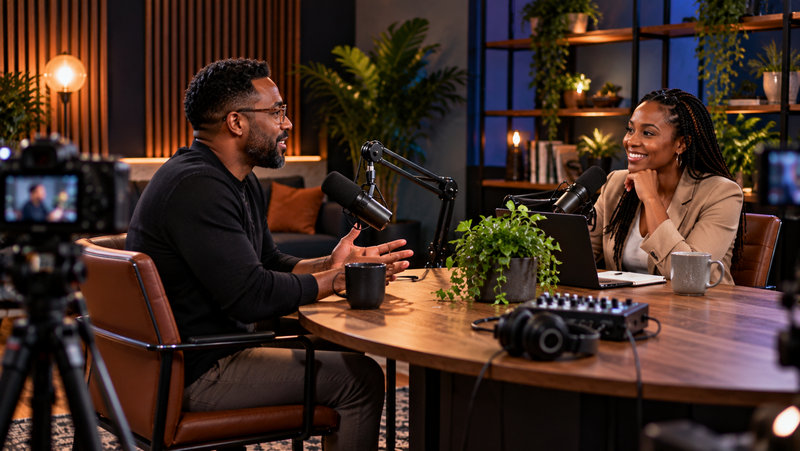
A done-for-you podcast service takes a lot of work off your plate. The cameras, the audio, the editing, and the clipping are all delegated to someone else, and you don’t have to worry about figuring out new tech or spending your limited time editing.
However, there’s an important part of production that can’t be handed off, and that’s you. Your experience and perspective are what make the content worth listening to in the first place. You already know your industry, understand the problems your customers face, and have experience answering their questions. Your job is to share that knowledge.
What Done-for-You Service Can Do
When you book a podcast studio, the production usually handles the cameras and audio. Once you leave, they can take care of editing. Depending on your plan, they may also turn longer recordings into shorter reels and clips for social media.
The hours you would have spent learning software or repairing a bad audio file can go back to running your business. If you were to do it all yourself, you’d have to dedicate nearly twice as much time for editing as you do filming, as well as manage an ongoing content calendar and posting schedule.
A full-service production team can take care of most of that. However, they can’t replicate your knowledge.
The Expertise a Production Team Can’t Supply
A production team can make you look sharp and sound clear, but it’s the perspective you built over years of work and practice that keeps someone listening.
Your Professional Opinions
A viewer can find a general answer to almost any question with a quick search. What they can’t get from a generic article is your experience and professional judgment.
This might look like a roofer explaining when a roof needs a patch and when it makes more sense to replace it. A homeowner with a leak doesn’t just want a list of opinions; they want to know what you would choose for your own house and why.
Those details are what make a business podcast feel personal and credible. Your local prospects aren’t just listening for generic information. They’re listening to how you think, what you’ve learned, and how you approach real-world problems.
Topics Are up to You
A production team can help you build a recording plan, but it should be based on your business goals. Which customers do you want to reach? What questions do they ask? What problems can your business help them solve?
For example, a family practice may want to attract more patients for a specific service. A home cleaning company may want to reach homeowners who need regular cleanings before the busy season. Your podcast topics should speak to both the customers you serve today and the potential customers you want to reach in the future. You know which services you want to grow, which customers you want to attract, and what those customers need to hear.
Guests Need Your Direction
Once you choose a guest, give them some direction before the recording. Let them know what you want to discuss, who the episode is for, and what you hope the audience will take away. A guest who knows the topic and has a story to share will be much more comfortable when the cameras turn on.
The right guest may also introduce your business to a new audience. If they share the episode with their own network, your name can reach people who may not have heard of you before. A little planning can help you get more out of that opportunity.
Before and After the Recording
Before You Record
Review the main talking points and the examples you plan to use. Then confirm any detail that needs to be accurate, such as a policy term or a code requirement. This is especially important when the subject is professional or technical.
You should also make sure that you leave out any private information. A client’s name may require permission before you include it in an episode. Your profession may also have specific rules about what you can say or promise on camera.
After You Record
Once the podcast studio has edited your episode, you can view it for final approval. This is a chance for you to make any adjustments before publication. You’re also the person who can tell whether a number or a recommendation is right. Be sure to answer all questions from your editor quickly, as approvals can be time-sensitive. A seasonal episode delayed by a week may miss the moment it was made for.
The Part of the Show That Stays Yours
A done-for-you production service can handle much of the work that goes into a podcast. The cameras, audio, editing, clipping, and other production tasks can all be handled by the studio. Your role is to bring the knowledge, experience, and perspective that give the show its value.
That may mean spending some time before a recording deciding what direction you want an episode to go. You may need to review an episode before it goes live or answer a question from your editor. You may also need to prepare a guest before the recording begins.
Those tasks take far less time than sorting through hours of footage or troubleshooting equipment. You can focus on the ideas and direction behind the content while your production team handles the work of turning those ideas into a polished show.