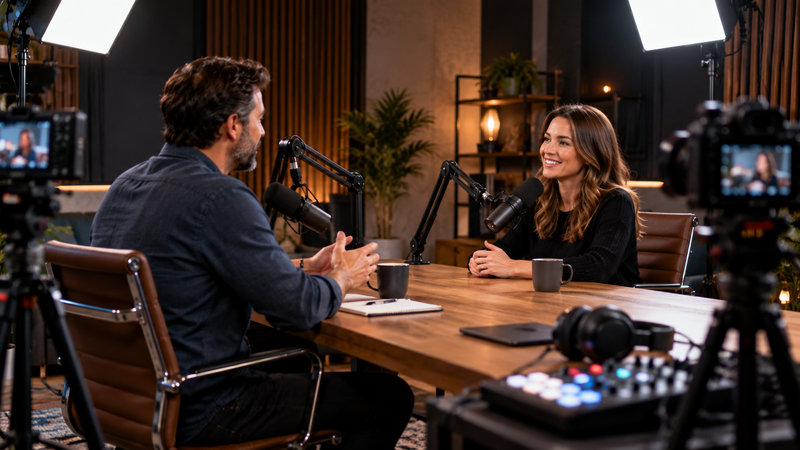
While it may be tempting to save money by recording your podcast with a single camera and simple microphones, doing everything yourself might split your attention among several tasks. From the moment you press record, you are the host, the technician, and the scheduler at once, and all three roles demand your attention. Each may be manageable on its own, but can cause trouble when they overlap.
You listen less closely when part of your mind is on the framing. You check the audio levels less often because the guest is waiting for the first question. The next guest arrives early and finds you mid-interview. The schedule you meant to track has already slipped.
After the recording, you still have hours of work to do, editing out dead space, syncing all the audio, and scheduling your posts.
Instead of doing that, you can rent a podcasting studio for a full recording day. You can record several conversations and bring in multiple guests while a production team handles the technical side. That leaves you free to focus on the content you want to create.
Before the First Guest Walks In
When you work with a production studio, the recording room should be prepared before you even get there. For some studios, this means positioning multiple camera angles, setting up the lighting, and ensuring the audio is ready to go before anyone sits down.
The studio should also stagger guest arrivals, with each guest scheduled to show up as their recording is about to begin. If you find the right production team, they can manage your guests while you’re recording, so you don’t have to step away from an interview to answer the door and get the next guest settled.
When a studio team handles those details, you can stay focused on the person in front of you instead of dividing your attention between the current conversation and everything happening outside the room.
Staggered arrivals can also affect how a guest feels when the recording starts, and how they are treated beforehand may reflect on you. A guest who walked in a few minutes ago and sat down in a ready room tends to talk more freely than one who had to wait through someone else’s recording.
How Rooms Are Prepared
A full recording day can include several guests, episode formats, and visual styles. A well-equipped studio makes those changes easy. Look for a studio with several themed rooms or backdrops. A different setting can give each episode its own look without requiring a completely new production setup.
When furniture and cameras can be adjusted quickly, you can move from one setup to the next without losing much recording time. You also get the convenience of handling several recordings in one visit, which can be very helpful when you’re fitting podcast production around a practice, workday, or job site.
The same flexibility can support different types of episodes. You might record a two-person interview in one setup, a solo episode in another, and bring in a remote guest by video call for a third. The studio team can adjust the framing and equipment for each format while you focus on the content.
That support also helps you stay focused between recordings. Instead of spending your breaks moving cameras, checking framing, or troubleshooting equipment, you can stay in conversation mode and prepare for the next guest. By the third recording of the day, you’re still focused on the discussion rather than worrying about technical logistics.
From Raw Footage to Finished Episodes
Once you’ve finished your full day of recording, you may have several hours of raw video and audio waiting for you to edit. Sometimes, turning that footage into finished episodes can take more time and attention than the recording itself.
A podcast production team can handle that post-production work for you. They can:
- Sync audio and video
- Adjust footage
- Clean up distracting sounds
- Cut unnecessary pauses or mistakes
- Prepare files
When several episodes come from the same recording day, that can leave you with a large amount of footage to sort through. Each conversion may include multiple camera files, separate audio tracks, and sections that require review before the episodes are ready for publication. A production team can handle that process, so you don’t have to spend your evenings figuring out which files belong together or where each edit should go.
What You Leave With When You’re Done
When you work with a video podcast production studio, you can focus on being the host, rather than the production crew. You can focus on the conversation while the cameras, audio, lighting, and schedule are taken care of by professionals.
At the end of a full recording day, you leave with finished recordings of each conversation. Multiple camera angles can give your editor wide and close-up views to work with, while professional audio engineering and editing help turn the raw footage into polished episodes and social media clips.