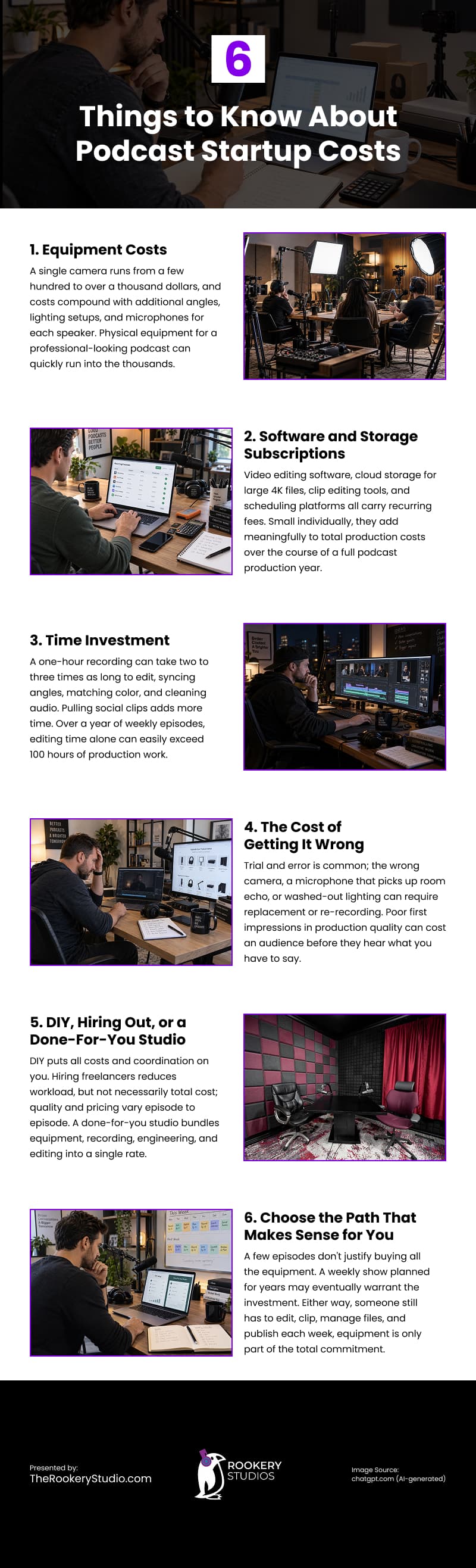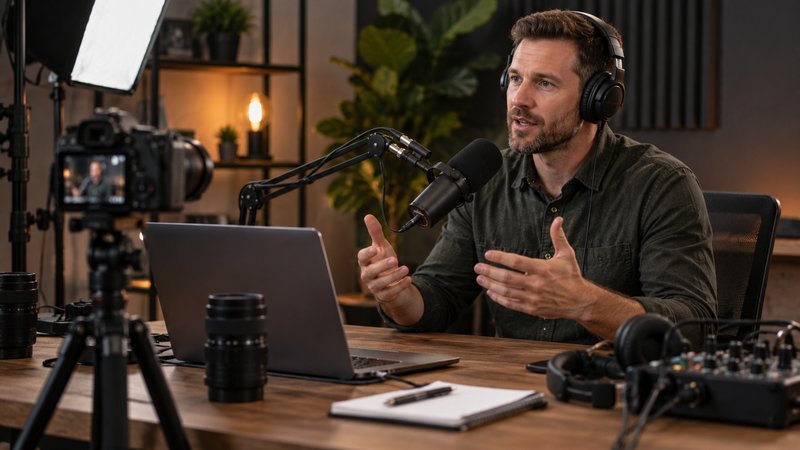
A podcast can look simple from the outside: a microphone, a camera, and a conversation. However, many people underestimate how much time, effort, and money it takes to make everything look and sound professional. Before you invest in creating a podcast for your business, know what’s involved so you can prepare for the potential costs.
Equipment Costs
A single camera can run anywhere from a couple hundred dollars for something basic to well over a thousand for more advanced gear. Those numbers compound when you add a second or third camera angle. In addition, each camera usually needs its own lighting setup to maintain consistent brightness and color across shots.
Audio works similarly. A single microphone can be inexpensive, but if you want to record more than one person, you typically need separate microphones for each speaker, along with an audio interface to manage the different audio tracks. The cost of physical equipment like cameras, lighting, and microphones can quickly run into the thousands.
Software and Storage Subscriptions
The equipment is usually a one-time cost, but recurring fees and storage needs can add significantly to your total.
- Most software companies require a monthly or annual subscription.
- Video editing software may need a computer powerful enough to handle multiple 4K video files running simultaneously.
- Long episodes made up of several 4K video files and high-quality audio can quickly use up free storage. You may eventually need additional external storage or a cloud storage subscription to keep past episodes accessible.
- Short clips cut from a longer recording may also need additional editing tools. Some are included with video editing software, while others require a separate subscription.
- A calendar or scheduling tool for managing content across platforms can add one more recurring item to your list.
These costs may seem small on their own, but they can add up over time. Make sure you factor them into your budget before you decide how you want to produce your podcast.
Time Investment
Even though a single podcast episode may only take an hour to record, editing can take two to three times as long once you factor in syncing multiple camera angles, matching color, and cleaning up the audio. Once the long-form video is finished, pulling clips from that footage for social media adds even more time.
None of that time includes the ongoing work of posting the different types of content, which is often a weekly task. Someone also has to keep track of what has been published, what is scheduled, and what still needs to be created.
You either have to take the time yourself or pay someone else to handle it. Over the course of a year, the editing time alone for a weekly podcast can easily add up to more than 100 hours.
The Cost of Getting It Wrong
You can plan for equipment and software costs, but it’s harder to account for the cost of getting things wrong. You may find that a camera isn’t right for your setup, a microphone picks up too much room echo, or your lighting makes the entire recording look washed out. You may then have to replace equipment, change your setup, or even re-record an episode. That kind of trial and error is common, but it’s rarely included in the original budget.
You also can’t overlook the importance of first impressions. If someone’s first experience with your business is a podcast that looks or sounds poorly produced, they may not stick around long enough to hear what you have to say.
DIY, Hiring Out, or a Done-For-You Studio
If you handle podcast production yourself, all of those costs are your responsibility. If you want a professional-looking podcast with multiple camera angles and clean audio, it can end up costing much more than most people expect.
Some business owners choose to hire out different parts of the process instead. This can reduce some of the work, but it doesn’t necessarily reduce the overall cost. For example, you may hire a freelancer to edit the full episode, while another handles short clips for social media. You may still be responsible for scheduling, sending files back and forth, answering questions, and keeping everyone on the same page. The cost can also change from one episode to the next, and the quality may vary depending on who is available. You end up saving yourself some of the work, but you’re still managing the process.
A done-for-you studio takes a different approach by handling the production under one roof. Equipment, software, recording, audio engineering, and editing are usually included in a single rate. You can record with multiple camera angles and have the finished episode edited without having to hire and coordinate several different people.
Choose the Path That Makes Sense for You
The right choice largely depends on how much content you plan to create and how much of the production work you’re willing to handle yourself. If you only want to record a few episodes, buying all the equipment and software probably doesn’t make much sense. On the other hand, if you’re planning to publish a weekly show for years to come, investing in your own setup may eventually be a good idea.
Keep in mind that equipment is only part of the commitment. Someone still needs to edit the episodes, create clips, manage the files, and get everything ready to publish each week.
For many business owners, a done-for-you podcast studio session offers a practical solution. You get professional equipment and production without having to buy, maintain, or manage it yourself. Instead of spending your time figuring out all the different pieces that go into producing a podcast, you can focus on sharing your expertise and creating useful content for your audience.
Infographic